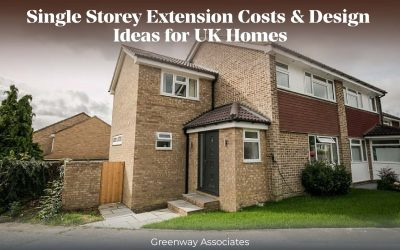
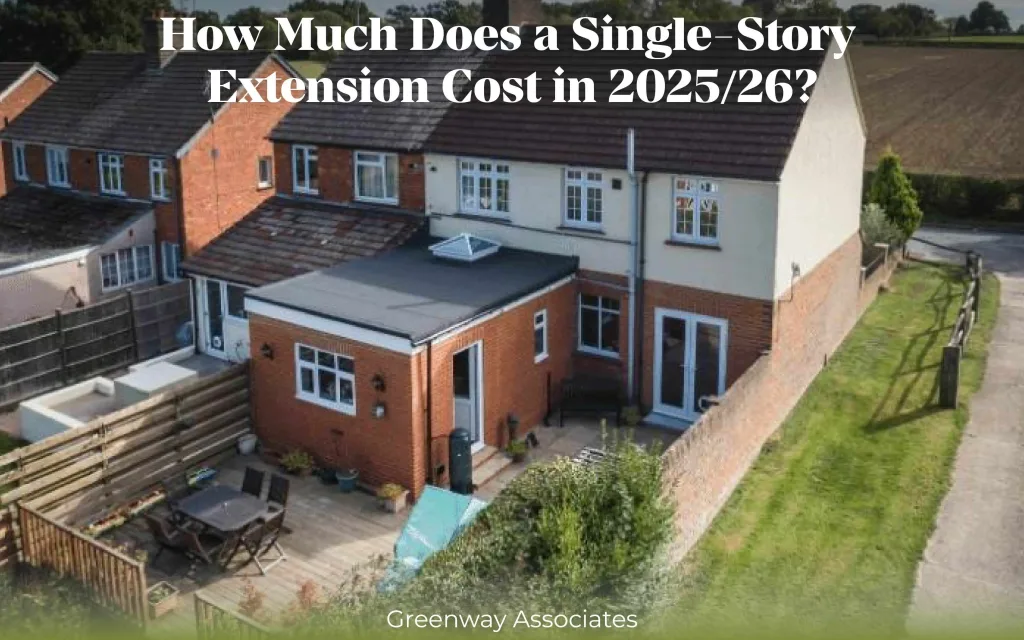
Picture this: Sarah from Manchester had been squeezing her growing family into a cramped Victorian terrace for years. Every morning felt like a game of Tetris—dodging around the breakfast table whilst her husband tried to make coffee in their galley kitchen. Sound familiar? By December 2024, she’d transformed her home with a stunning single storey rear extension costing £42,000, creating an open-plan kitchen-diner that’s become the heart of her family life. Her story mirrors that of thousands of UK homeowners discovering that single storey extensions offer the most cost-effective path to the space they desperately need. And you may be thinking, “Well, how much does a single storey extension cost?”
With UK property prices continuing their relentless climb—averaging £287,000 in 2024 according to the ONS—moving house simply isn’t viable for most families. Instead, savvy homeowners are choosing to extend, and single storey extensions have emerged as the clear winner for maximising space whilst minimising stress and expense.
The single storey extension cost UK 2025 landscape has shifted significantly since 2024, with material costs stabilising after the post-pandemic surge. Currently, you can expect to invest between £1,800 and £2,800 per square metre for a quality single storey extension, depending on your location and specification choices.
Regional Cost Variations:
The average cost of single storey extension UK 2024 data shows that most homeowners spent between £35,000 and £65,000 on their projects. However, these figures can be misleading without context. A basic 20m² rear extension in Yorkshire might cost £40,000, whilst the same space in Kensington could reach £80,000.
What Influences Your Costs:
| Cost Factor | Budget Impact | Example |
|---|---|---|
| Foundation requirements | 15-25% of total cost | Complex ground conditions add £8,000-£15,000 |
| Roof specification | 10-20% of total cost | Flat roof vs pitched roof difference: £3,000-£8,000 |
| Windows & doors | 12-18% of total cost | Standard vs bi-fold doors: £2,000-£12,000 difference |
| Internal finishes | 20-35% of total cost | Basic vs luxury kitchen: £15,000-£40,000 difference |
The question “do I need planning permission for a single storey extension” keeps many homeowners awake at night, but the answer is often more encouraging than you might expect. Under current permitted development rights for single-story extensions 2024, many projects can proceed without formal planning permission.
Permitted Development Limits (England):
Rear extensions: Up to 6 metres for detached houses, 3 metres for terraced/semi-detached
Height restrictions: Maximum 4 metres to ridge, 3 metres to eaves
Coverage: No more than 50% of original garden area
When You DO Need Planning Permission:
Conservation areas – Special rules apply
Listed buildings – Always requires consent
Article 4 directions – Local restrictions in place
Exceeding permitted development limits
Forward-facing extensions – Rarely permitted under PD
The Prior Notification Process: Even under permitted development, extensions over certain sizes require prior notification. This involves:
Submitting basic plans to your local authority
£96 fee (2025 rates)
42-day determination period
Neighbours’ consultation opportunity
Sarah’s Manchester extension fell comfortably within permitted development rights, saving her £1,500 in planning fees and 8-12 weeks in waiting time.
Permitted development rights for single-story extensions 2024 have been extended several times since their introduction, reflecting government recognition that families need space to grow. These rights are designed to encourage sensible home improvements whilst protecting neighbours’ amenity.
Key Permitted Development Rules:
Rear Extensions
Single storey: 6m (detached), 3m (terraced/semi-detached)
Must not extend beyond rear wall of original house by more than these limits
Cannot exceed 4m in height
Cannot cover more than 50% of original curtilage
Side Extensions
Single storey only under PD
Cannot extend beyond front wall
Maximum height of 4m
Cannot be wider than half the original house width
Important Considerations: The single storey extension planning permission requirements become mandatory if you’re in a conservation area, where permitted development rights are often restricted or removed entirely. Always check with your local planning authority before assuming your project qualifies.
Whilst planning permission focuses on the visual and spatial impact of your extension, single storey extension building regulations UK govern safety, energy efficiency, and structural integrity. Every single storey extension must comply with building regulations, regardless of size.
Key Building Regulations Areas:
The Building Regulations Process:
Most homeowners work with their builder or architect to handle building regulations submissions. The cost is typically included in professional fees, but budget £800-£1,500 if managing this separately.
Creating affordable single storey house extension ideas doesn’t mean compromising on style or functionality. Some of the most successful projects we’ve seen have modest budgets but clever design thinking.
Budget-Friendly Design Strategies:
Simple Rectangular Extensions
The most affordable single storey rear extension ideas often involve simple, rectangular shapes that minimise complex construction details. A 6m x 4m rear extension with standard finishes typically costs £45,000-£55,000 outside London.
Whilst pitched roofs look attractive, flat roofs with modern EPDM membranes cost 20-30% less and can incorporate roof lights for natural light. Modern flat roofs, when properly detailed, offer 20+ year lifespans.
Real Example – Budget Extension: Tom in Leeds created a 20m² kitchen extension for just £38,000 by:
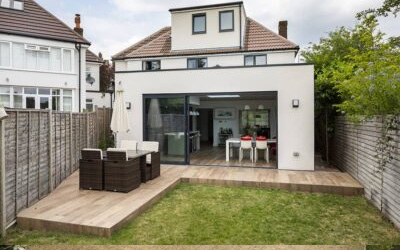
Single storey rear extension projects offer the greatest potential for transformation, creating seamless connections between indoor and outdoor living spaces. The single storey rear extension cost per m² UK averages £2,200, making this one of the most cost-effective ways to add value to your property.
Popular Rear Extension Layouts:
Perfect for corner plots or when you want to wrap around existing structures. L-shaped designs can incorporate:
Spanning the entire width of your house, these extensions create impressive open-plan living spaces. Typical costs range from £50,000-£80,000 depending on size and specification.
Combining rear and side extensions, wrap-around designs maximise space but require careful planning to ensure neighbour consultation under permitted development rules.
Design Features That Add Value:
| Feature | Cost Addition | Value Added |
|---|---|---|
| Bi-fold doors | £3,000-£8,000 | 5-8% property value |
| Roof lights | £800-£2,000 each | 3-5% property value |
| Underfloor heating | £2,500-£4,000 | 2-4% property value |
| Kitchen island | £3,000-£12,000 | 4-7% property value |
Single storey side extension projects work particularly well for semi-detached and detached properties with adequate side access. These extensions can provide:
Side Extension Considerations: The single storey side extension building regulations UK requirements focus heavily on:
Average costs for side extensions range from £35,000-£60,000, depending on size and internal specifications.
Understanding how much does a single-story extension cost in the UK requires breaking down costs into constituent elements. This transparency helps you make informed decisions about where to invest your budget.
Typical Cost Breakdown (per m²):
| Element | Cost Range | Percentage of Total |
|---|---|---|
| Foundations & Groundwork | £300-£500 | 15-20% |
| Structure & Walls | £450-£650 | 25-30% |
| Roof Construction | £280-£420 | 12-18% |
| Windows & External Doors | £200-£400 | 10-15% |
| Internal Finishes | £350-£600 | 18-25% |
| Electrical & Plumbing | £180-£280 | 8-12% |
| Professional Fees | £150-£250 | 8-12% |
Regional Variations Impact: London premiums typically add 25-40% to these base costs, whilst Scotland and Northern England might see 10-15% reductions. Labour costs represent 40-50% of total project costs, explaining much of the regional variation.
Hidden Costs to Consider:
The question “how long does a single storey extension take to build” depends significantly on project complexity and weather conditions. Most single storey extensions follow this timeline:
Typical Construction Schedule:
Factors Affecting Timeline:
Smart homeowners understand that cheap single-story extension ideas to maximise space aren’t about cutting corners—they’re about making intelligent choices that deliver maximum impact for minimum spend.
Value Engineering Strategies:
High-Impact, Low-Cost Upgrades:
Where NOT to Compromise:
Skilled DIY enthusiasts can reduce costs by:
Professional Tasks Only:
After reviewing hundreds of single storey extension projects, certain mistakes appear repeatedly. Learning from others’ experiences can save you thousands of pounds and months of frustration.
Planning & Design Mistakes:
Many homeowners focus solely on construction costs, forgetting:
Single storey extensions can feel dark without proper light planning:
Poor communication with neighbours causes:
Construction Phase Mistakes:
Always verify:
Every change during construction costs 2-3x more than planning properly upfront:
Modern single storey house extension designs UK increasingly focus on adaptability and future needs. Today’s extension should serve your family for decades, not just current requirements.
Technology Integration:
Lifestyle Adaptations:
Environmental Future-Proofing: Modern building regulations increasingly demand:
Investment Protection: Your extension should enhance property value long-term:
Single storey extensions represent the sweet spot of home improvement—delivering maximum space and value enhancement whilst minimising complexity and cost. Whether you’re creating the kitchen-diner of your dreams or adding essential family space, the key lies in thorough planning, realistic budgeting, and working with experienced professionals.
Remember Sarah from our opening story? Her £42,000 investment not only solved her family’s space problems but added an estimated £65,000 to her property value. More importantly, it created the family hub she’d always wanted—a space where morning chaos transformed into cherished family time.
Your Next Steps:
Define your requirements – What space do you actually need?
Check planning status – Confirm your permitted development rights
Get multiple quotes – Compare at least 3 detailed proposals
Plan for contingencies – Budget 10-15% extra for unexpected costs
Choose your timing – Book builders well in advance
Ready to Start Your Extension Journey?
Don’t let another cramped morning convince you that your current space is “good enough.” With single storey extension costs UK 2025 remaining competitive and permitted development rights more generous than ever, there’s never been a better time to create the home your family deserves.
Contact our extension specialists today for a free consultation and discover how your extension dreams can become reality. Transform your space, transform your life—it’s time to stop wishing and start building.
Have questions about planning permission, building regulations, or design ideas? Leave a comment below and our experts will provide personalised advice for your specific situation.