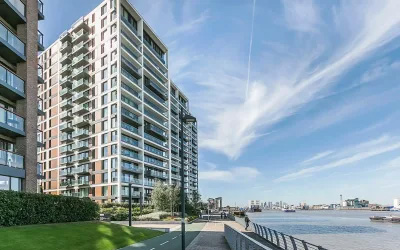
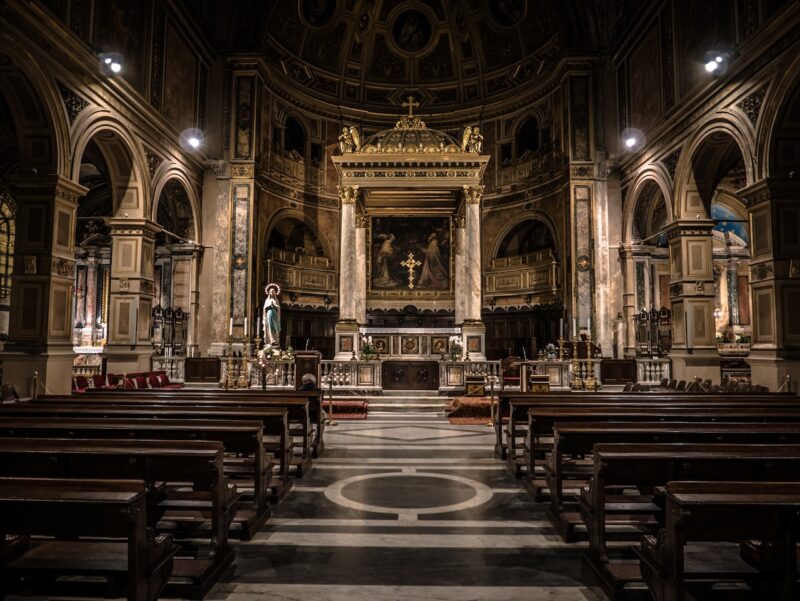
People meeting at the paved open plaza alongside the Jubilee Church reminds us great architecture can create wonderful outdoor, as well as indoor, spaces. We’re also reminded churches have always been places where communities gather. Let’s look at the Brighton Road Baptist Church in Horsham, West Sussex, for example (designed by Scott Brownrigg). Now, we may be biased, because I worked on this project, but this building (opened in June 2008) shows how a church can be so much more than just a church. A key location for community activities in Horsham, the Brighton Road Baptist Church houses everything from a sports hall and meeting rooms to a crèche and an auditorium that can be used, for example, for theatre or ballet performances.
A modern church should be flexible too. Congregations won’t necessarily always fill the largest space in the church for every service and so the Brighton Road Baptist Church, for example, houses a prayer chapel in which small midweek services can be held (perhaps while other community activities are taking place in the building’s larger spaces). Don’t forget acoustics. Choirs practise hard, so let them be heard!
Building schedules are another important consideration when planning the often complex architecture of a place of worship. Are you aware that construction of the stunning Basílica de la Sagrada Família (Barcelona, Spain) began in 1882 and continues to this day? The current goal is to complete work in 2026. Now, we’d never criticise the legendary Antoni Gaudí (Spanish, 1852-1926), the main architect behind the Sagrada Família, but if you are commissioning work on a place of worship, make sure your architect has a realistic grasp of budgets and time frames.