Do you need Planning Permission?

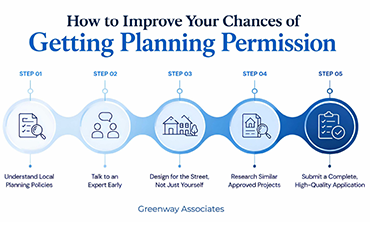
Planning approval is required so that local government can monitor and control the nation’s property development. Development control departments consider the neighbourliness of designs and the acceptability of the resulting building proposed for the specific area. The planning approval process involves knowledge of planning matters and communication with the statutory authorities, but approval is not guaranteed.

Whether or not one needs Planning Permission is often the biggest question at the start of any project. Not all aspects of building development require permission, as home owners are allowed a limited range of freedoms to carry out external changes to their properties. A material change to a building’s appearance does however require Planning Permission.

General Guidance

Not only will it be unfortunate, but certainly costly if you fail to be granted approval for your constructed project; as it is likely the Council will have it altered, or even demolished. Here are some basic questions to ask related to altering a house:

  1. Does the alteration increase the footprint size above 50% of the curtilage?
  2. Does the proposal exceed the height of the original roof?
  3. Does the proposed eaves height exceed that of the existing?
  4. Are the proposed works expected to front the highway?
  5. Is the side extension greater than half the width of the original house?
  6. Does the proposed roof exceed 4m, or does the eaves height exceed 3m?
  7. Is the proposal within 2m of the property boundary?
  8. Does the alterations include balconies verandas or raised platforms?
  9. Are you installing or altering a chimney, flue or microwave antenna?
  10. Are the materials proposed similar to that used on the existing house?

Answers to these questions may mean that planning permission may not be needed and that your proposal falls under your Permitted Development Rights. Permitted Development Rights are your legal rights to alter your property under certain criteria. For more information on Permitted Development Rights please follow link below.

http://www.planningportal.gov.uk/permission/

If in doubt seek expert advice as extensions to Flats, Maisonettes and Listed Buildings are NOT covered by Permitted Development Rights.

If it has been confirmed that Planning Permission is not required for your development, it is advantageous to acquire a Certificate of Lawful Development from the Planning Authority. Whilst not granting permission this is to confirm that the development is legal, and can be proved useful when trying to sell the property in the future.

To find out if you require Planning Permission contact your local Planning Authority or contact me for free impartial advice.

Thames Water Build Over Agreement UK: Official Rules, Costs & Approval Guide for Homeowners You’ve got plans for an extension.…
Picture this: Sarah from Manchester had been squeezing her growing family into a cramped Victorian terrace for years. Every morning…
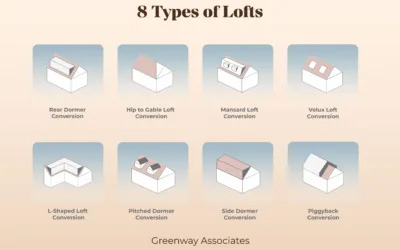
8 Loft Conversion Types: Which One is Perfect for your Home Imagine walking up a stylish staircase to a bright,…
5 Top Tips for Successful Loft Conversion: Transform Your Space Imagine waking up to a stunning view from your brand-new…
Planning Permission in the UK: Step-by-Step Guide on how to Secure It How would you feel if your neighbours’ large…
Navigating Permitted Development in Areas of Outstanding Natural Beauty (AONB) In the dynamic realm of architectural design, Greenway Associates is…
Navigating Permitted Development on Agricultural Land: A Closer Look In the dynamic realm of architectural design, Greenway Associates is committed…
Navigating the Evolving Landscape of Permitted Development in 2022 As the architectural design landscape evolves, Greenway Associates is dedicated to…
L Shaped Dormer Loft Conversion Ideas Nestled in the picturesque surroundings of Surrey, Greenway Associates is the go-to architectural design…