
Office to Residential conversion

In an earlier post, ‘What is Permitted Development?’ I stated that Permitted Development was also applicable to Buildings other than Dwellings, and this feature will discuss elements of this subject.

One such noteworthy topic is Office to Residential Conversions which do not require Planning Permission if certain criteria is met.  Permitted Development Rights are your legal rights to alter your property under certain criteria and this states that type B1(a) office buildings can be converted to C3 residential use without Planning permission.  The property owner will need to present three (3) key reports in order to meet the Prior Approval criteria.  These are Floor Risk Assessment, Traffic Impact Assessment and a Contamination report which if proved conclusive then the project may go ahead.

However, a number of local Authorities are in opposition to the Government’s implementation of this Permitted Development facility as they argue that the housing stock will be flooded with sub-standard housing since planning permission is not required.  One such local authority is the London Borough of Croydon who in September 2015, opted out and removed the Permitted Development Rights in the Town Centre.  Developers hit back saying, “Permitted development schemes are much more viable than new builds so get delivered far quicker and the homes are more affordable for normal people”. For more information on this issue please follow the link http://www.croydonadvertiser.co.uk/permitted-development-transformed-Croydon-town/story-28163009-detail/story.html or Google search these four words “Croydon Advertiser Permitted Development”.

It is also possible to convert B8 Storage & Distribution buildings to C3 residential use without Planning permission.  The property owner will need to present three (6) key reports in order to meet the Prior Approval criteria.  These are air quality, transport and highways impacts, contamination risks, flooding risks, noise impact, and impact on the sustainability of adjoining uses. If proved conclusive then the project may go ahead.

Agricultural buildings under 450msq are also permitted to convert to C3 Dwelling Houses.  The property owner will need to present three (6) key reports in order to meet the Prior Approval criteria.  These are transport and highways impacts, noise impacts, contamination risk, flooding risks, whether the building is suitable for a residential use, and the design or external appearance of the building.

In October 2015, the Government announced that Permitted Development rights will now become permanent.

Picture this: Sarah from Manchester had been squeezing her growing family into a cramped Victorian terrace for years. Every morning…
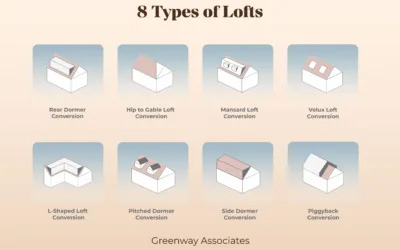
8 Loft Conversion Types: Which One is Perfect for your Home Imagine walking up a stylish staircase to a bright,…
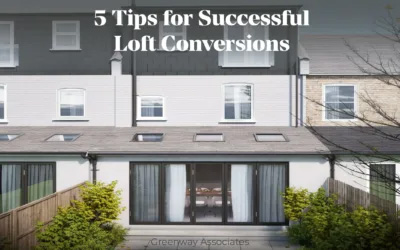
5 Top Tips for Successful Loft Conversion: Transform Your Space Imagine waking up to a stunning view from your brand-new…
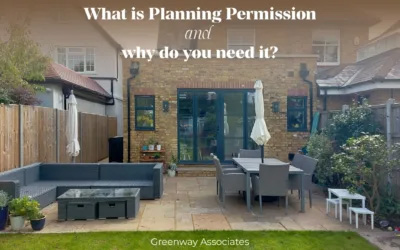
Planning Permission in the UK: Step-by-Step Guide on how to Secure It How would you feel if your neighbours’ large…
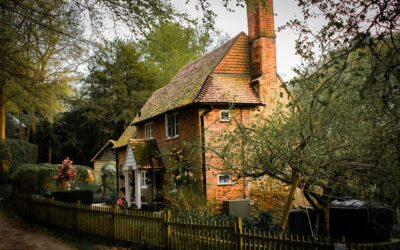
Navigating Permitted Development in Areas of Outstanding Natural Beauty (AONB) In the dynamic realm of architectural design, Greenway Associates is…
Navigating Permitted Development on Agricultural Land: A Closer Look In the dynamic realm of architectural design, Greenway Associates is committed…
Navigating the Evolving Landscape of Permitted Development in 2022 As the architectural design landscape evolves, Greenway Associates is dedicated to…
L Shaped Dormer Loft Conversion Ideas Nestled in the picturesque surroundings of Surrey, Greenway Associates is the go-to architectural design…
Loft Conversion With A Balcony In the world of architectural design, a loft conversion is not just about expanding your…