
The Ultimate Guide to Getting Planning Permission Approved First Time/

The Ultimate Guide to Getting Planning Permission Approved First Time

Have you ever spent months planning your dream extension, only to worry that one decision from the council could stop everything?

You’re not alone.

Every year, thousands of UK homeowners submit planning applications for house extensions, loft conversions, granny annexes, and home improvements. While many applications are approved, others face delays, requests for amendments, or outright refusals. The difference often isn’t luck. It’s preparation.

How to Improve Your Chances of Getting Planning Permission in the UK
The good news is that there are proven steps you can take to significantly improve your chances of getting planning permission approved. 

Whether you’re planning a rear extension, loft conversion, garage conversion, or a completely new home, this guide explains the practical strategies that planning consultants and architectural designers use to maximise approval rates.

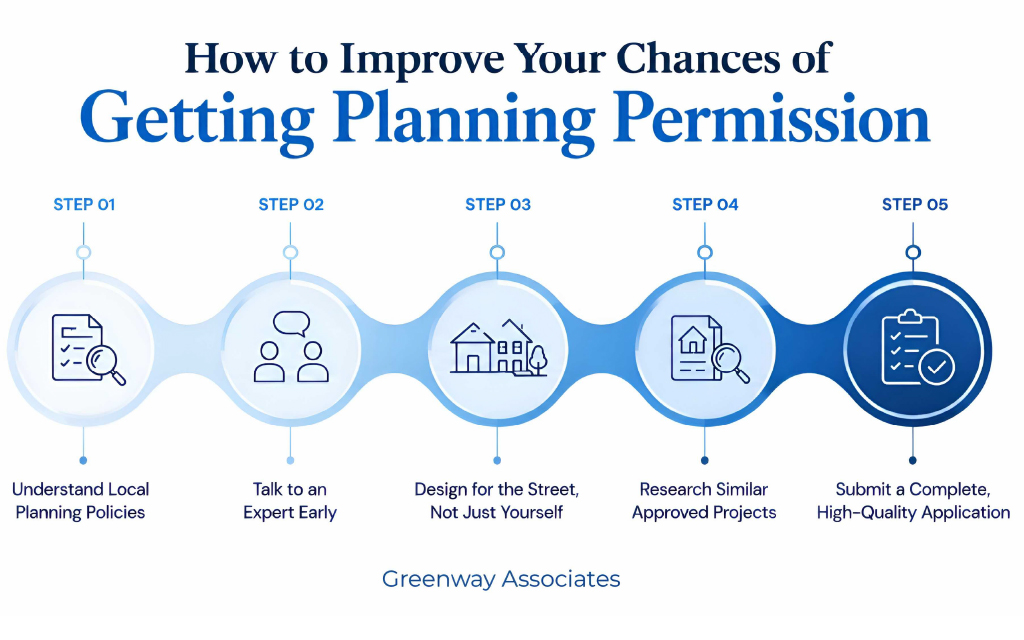
How to improve your chances of getting planning permission Greenway Associates.jpg
How to improve your chances of getting planning permission

Table of Contents

Understand Local Planning Policies Before You Design

One of the biggest mistakes homeowners make is designing a project before understanding what their local council is likely to support.

Every planning authority has its own policies, priorities, and restrictions.

Factors that may affect your proposal include:

– Conservation Areas
– Green Belt locations
– Listed Buildings
– Neighbourhood Plans
– Design Guides
– Residential Extension Policies

For example, what may be acceptable in one borough could be refused in another.

Why This Matters
Planning officers assess applications against planning policies first and personal preferences second.

A design that aligns with local planning policies will always have a stronger chance of approval.

Top Tip: Design with planning policy in mind rather than trying to challenge it later.

Speak to an Architectural Designer Early

Many planning applications encounter problems long before they reach the planning department.

An experienced architectural designer can identify issues that homeowners often miss, including:

– Overlooking neighbours
– Excessive scale and massing
– Inappropriate roof designs
– Boundary concerns
– Potential planning objections

Early professional advice can save significant time and money.

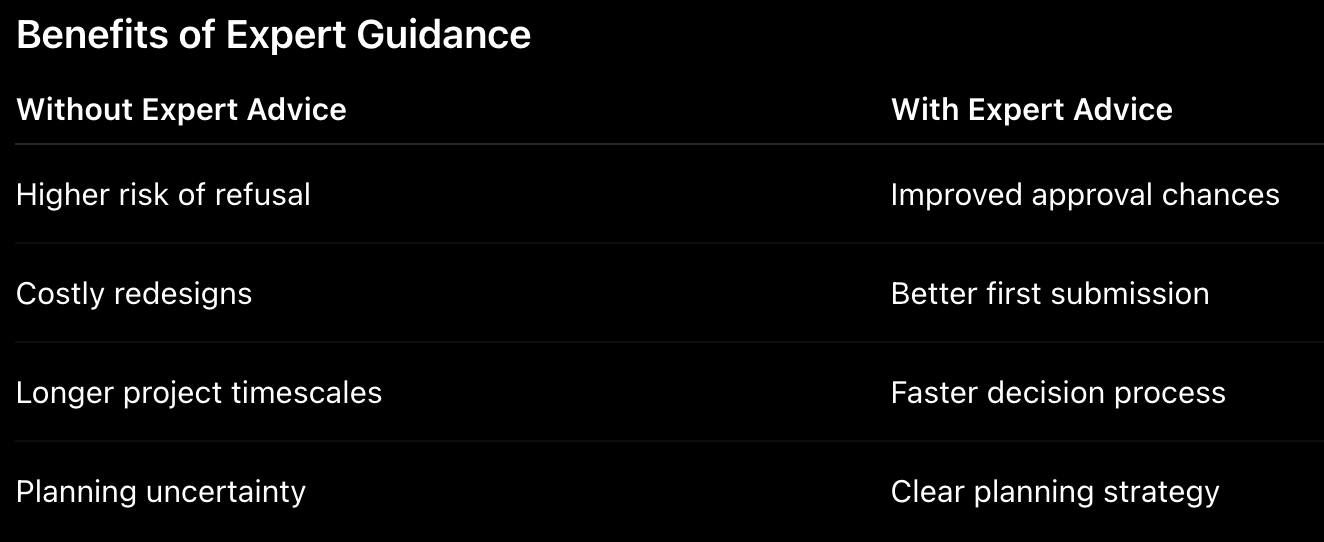
Benefits of Expert Guidance

Benefits of Expert Guidance

A relatively small investment at the beginning can prevent months of frustration later.

Design for the Street, Not Just Yourself

One of the most misunderstood aspects of planning permission is that councils are not only assessing your needs.

They are also considering the wider impact on the surrounding area.

Planning officers typically review:

– Street appearance
– Impact on neighbouring properties
– Privacy and overlooking
– Overshadowing
– Character of the area
– Visual impact

Many homeowners focus entirely on maximising internal space. However, successful planning applications balance personal requirements with the character of the neighbourhood.

Ask Yourself:
1) Will the extension look out of place?
2) Does it dominate neighbouring properties?
3) Could it reduce privacy?
4) Does it respect the existing street scene?

The most successful designs are often those that feel like a natural extension of the existing property.

Research Similar Approved Projects Nearby

One of the most powerful planning permission strategies is surprisingly simple:

Look at projects that have already been approved in your area.

Previous approvals can provide valuable evidence and insight into what your local authority is likely to support.

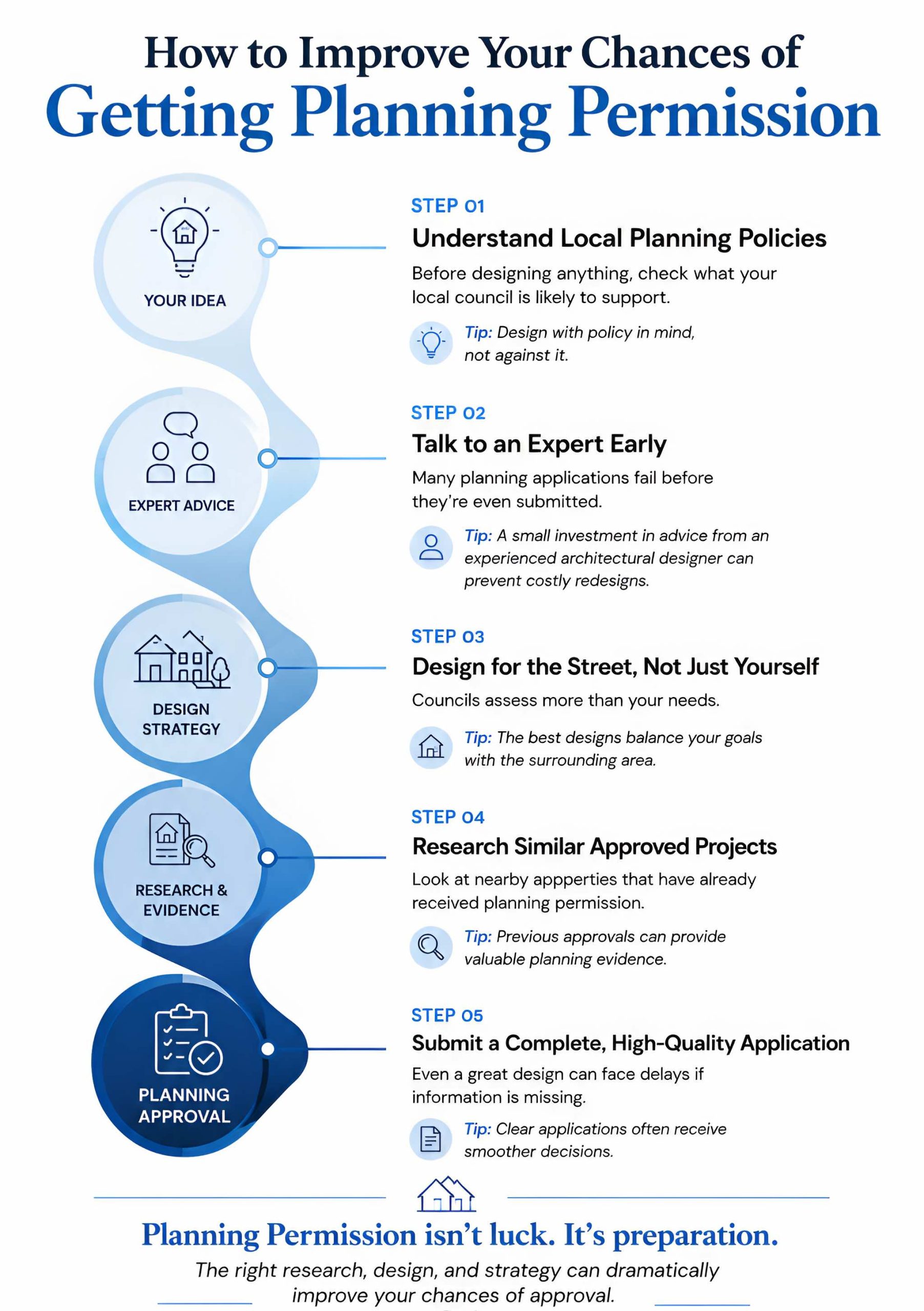
How to improve your chances of getting planning permission Greenway Associates.jpg (1)

Things to Look For
– Rear extension sizes
– Side extension designs
– Loft conversion styles
– Roof alterations
– Materials used
– Design approaches

Most councils publish planning applications online, allowing homeowners to review approved projects nearby.

Why This Works
Planning officers often seek consistency in decision-making.

If similar properties have received approval for comparable developments, this can strengthen the justification for your proposal.

Think of approved projects as planning clues rather than guarantees.

Submit a Complete, High-Quality Planning Application

Even an excellent design can face delays if the application itself is incomplete.

Planning officers need sufficient information to assess your proposal accurately.

Typical Planning Application Requirements
– Existing and proposed drawings
– Site location plan
– Block plan
– Elevations
– Floor plans
– Design and Access Statement (where required)
– Supporting planning statements

Missing information often results in:

– Validation delays
– Requests for further information
– Extended decision periods

What Makes a Strong Application?
– Accurate drawings
– Clear design rationale
– Policy compliance
– Professional presentation
– Supporting evidence where necessary

A well-prepared application demonstrates professionalism and gives planning officers confidence in the proposal.

Common Planning Permission Mistakes to Avoid

Many planning refusals result from avoidable mistakes.

Avoid These Common Errors
– Designing before checking local policies
– Ignoring neighbour impacts
– Building too large for the plot
– Submitting incomplete drawings
– Assuming similar projects guarantee approval
– Waiting until refusal before seeking expert advice

By addressing these issues early, you can significantly improve your likelihood of success.

Why Planning Permission Isn’t About Luck
Many people believe planning permission is unpredictable.

In reality, most successful applications follow the same pattern:

Research
Professional advice
Policy-led design
Local evidence
Quality documentation

When these elements come together, approval becomes far more achievable.

Planning permission isn’t luck.

It’s preparation.

Frequently Asked Questions

How can I improve my chances of getting planning permission?
The best way is to design in accordance with local planning policies, seek professional advice early, and submit a complete application.

What is the most common reason planning permission is refused?
The most common reasons include adverse impact on neighbours, poor design, overlooking, and proposals that conflict with local planning policies.

Can an architect improve the chances of planning permission success?
Yes. An experienced architectural designer can identify planning risks early and create designs that better align with council requirements.

Should I speak to the council before applying?
In many cases, yes. Pre-application advice can help identify potential issues before submission.

Do similar approved projects guarantee approval?
No. However, they can provide valuable evidence and indicate what the council has supported previously.

Final Thoughts
Getting planning permission approved is rarely about chance. It’s about understanding the rules, designing intelligently, and presenting a strong application.

Whether you’re planning a loft conversion, single-storey extension, double-storey extension, granny annexe, or a completely new home, investing time in preparation can dramatically improve your chances of success.

At Greenway Associates, we help homeowners across Surrey, London, and the South East navigate the planning process with confidence. From feasibility studies and architectural design to planning applications and technical drawings, our team can guide you every step of the way.

Ready to improve your chances of planning permission approval?

Contact Greenway Associates today for a free consultation and expert planning advice.

Thames Water Build Over Agreement UK: Official Rules, Costs & Approval Guide for Homeowners You’ve got plans for an extension.…
Picture this: Sarah from Manchester had been squeezing her growing family into a cramped Victorian terrace for years. Every morning…

8 Loft Conversion Types: Which One is Perfect for your Home Imagine walking up a stylish staircase to a bright,…
5 Top Tips for Successful Loft Conversion: Transform Your Space Imagine waking up to a stunning view from your brand-new…
Planning Permission in the UK: Step-by-Step Guide on how to Secure It How would you feel if your neighbours’ large…

Navigating Permitted Development in Areas of Outstanding Natural Beauty (AONB) In the dynamic realm of architectural design, Greenway Associates is…
Navigating Permitted Development on Agricultural Land: A Closer Look In the dynamic realm of architectural design, Greenway Associates is committed…
Navigating the Evolving Landscape of Permitted Development in 2022 As the architectural design landscape evolves, Greenway Associates is dedicated to…

L Shaped Dormer Loft Conversion Ideas Nestled in the picturesque surroundings of Surrey, Greenway Associates is the go-to architectural design…